
The standard Diflucan dose for a vaginal yeast infection is one single 150 mg tablet taken by mouth. That is it. One pill, one time. For most uncomplicated yeast infections, this single dose is all you need.
Diflucan is the brand name for fluconazole, an antifungal medication that weakens cell membrane of yeast so it cannot survive. It is one of most commonly prescribed treatments for vaginal yeast infections because of how simple dosing is.
How Does a Single 150 mg Dose Work?
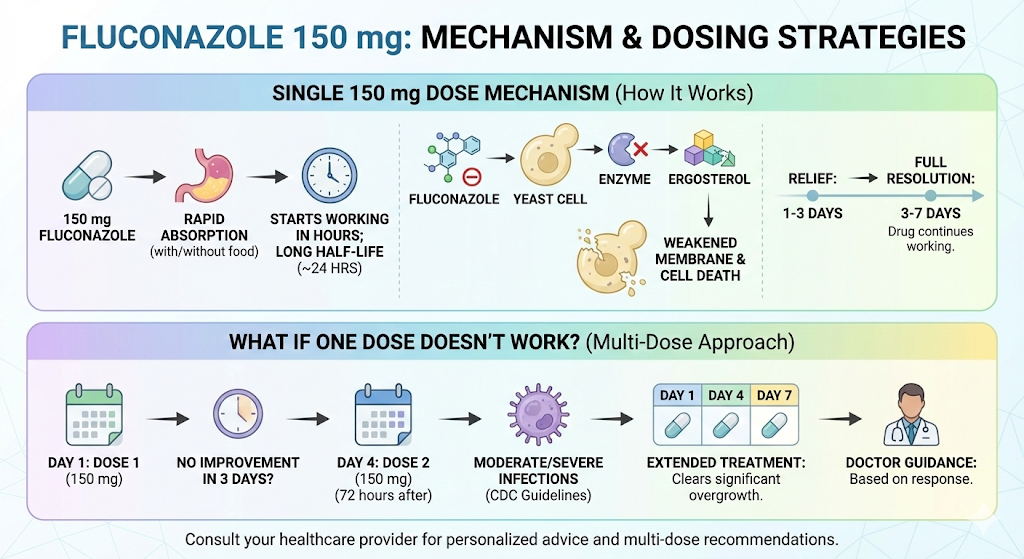
Fluconazole absorbs quickly and almost completely through your digestive system. You can take it with or without food, and it starts working within a few hours of swallowing tablet. The drug has a long half-life of about 24 hours, which means it stays active in your body well after you take it.
The medication targets an enzyme that yeast cells need to produce ergosterol. Ergosterol is a critical building block of yeast cell membrane. Without it, membrane weakens and yeast cells die off.
Most people start to feel relief within one to three days. Full symptom resolution usually takes about three to seven days. So even though you only take one dose, drug continues working in your system during that time.
What If One Dose Does Not Work?
Sometimes a single 150 mg dose is not enough. If your symptoms do not improve within three days, your doctor may recommend a second dose taken 72 hours after first.
For moderate to severe vaginal yeast infections, the CDC guidelines suggest taking two to three doses of 150 mg, spaced 72 hours apart. So schedule would look something like day one, day four, and day seven.
This extended approach gives medication more time to fully clear infection, especially when yeast overgrowth is more significant or when symptoms are intense. Your doctor will guide you on whether a multi-dose approach is necessary based on how your body responds.
What About Recurrent Yeast Infections?
Recurrent vulvovaginal candidiasis means you have had three or more yeast infections within a single year. This pattern affects a significant number of people and requires a different treatment approach than a one-time infection.
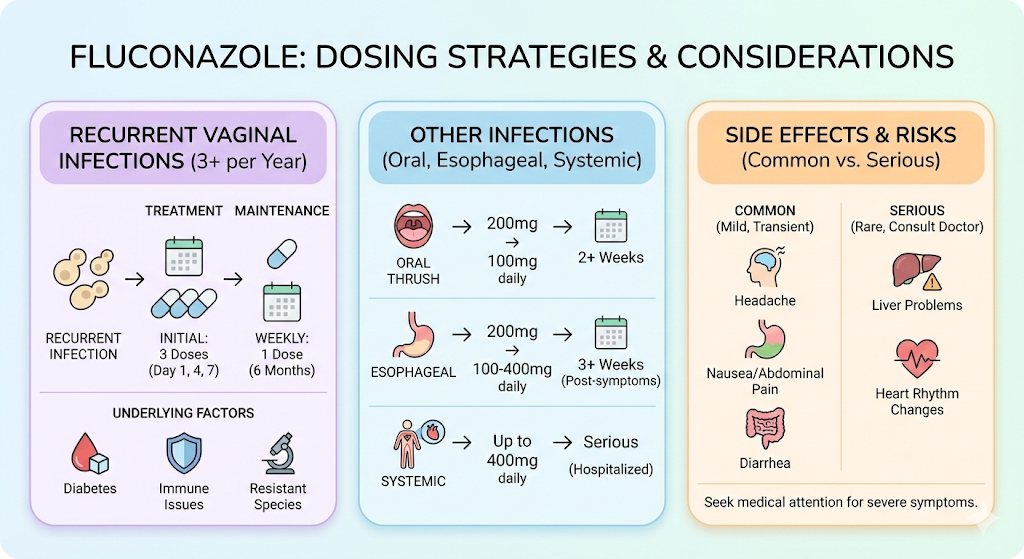
For recurrent infections, doctors often prescribe an initial treatment course of three doses of 150 mg (taken every 72 hours), followed by a maintenance regimen. The maintenance phase typically involves taking one 150 mg dose once a week for six months.
This longer course helps suppress yeast and prevent new infections. While it is effective at reducing flare-ups, some people experience infections again after stopping. That is when your doctor may look into underlying factors like uncontrolled diabetes, immune system issues, or whether Candida species causing your infections is resistant to fluconazole.
Does Dose Change for Other Types of Yeast Infections?
Yes. The 150 mg single dose applies specifically to vaginal yeast infections. Other types of fungal infections require different dosing.
For oral thrush (a yeast infection in your mouth or throat), the typical dose is 200 mg on first day, followed by 100 mg once daily for at least two weeks.
For esophageal candidiasis, the dosing starts same way, 200 mg on day one followed by 100 mg daily. Treatment lasts at least three weeks and continues for two weeks after symptoms resolve. Doses may go up to 400 mg daily depending on response.
For systemic candida infections that spread through bloodstream, doses can reach up to 400 mg per day. These are more serious infections that typically happen in hospitalized or immunocompromised patients.
What Are Common Side Effects?
Diflucan is generally well tolerated, especially at single 150 mg dose. But like any medication, it can cause side effects.
The most common ones include headache (about 13 percent of patients), nausea (about 7 percent), and abdominal pain (about 6 percent). Some people also experience diarrhea, dizziness, or a temporary change in taste.
These are usually mild and resolve within a day or two. Serious side effects are rare at single dose level but can include liver problems with prolonged use and heart rhythm changes in people taking certain other medications.
If you notice yellowing of your skin or eyes, dark urine, or severe stomach pain after taking fluconazole, contact your doctor right away.
Are There Special Considerations?
A few situations may affect how Diflucan is dosed or whether it is right choice for you.
Kidney problems. Fluconazole is cleared primarily through your kidneys. If you have kidney issues and need multiple doses, your doctor will likely reduce your daily dose. A single dose for a vaginal yeast infection does not usually require adjustment.
Pregnancy. The product label recommends against using fluconazole during pregnancy except in severe infections. Some studies have suggested a possible connection to miscarriage in early pregnancy. Talk to your doctor before taking it if you are pregnant or could be.
Breastfeeding. Small amounts of fluconazole pass into breast milk, but a single 150 mg dose is generally considered unlikely to cause problems for a nursing infant.
Drug interactions. Fluconazole interacts with several medications, including blood thinners like warfarin, certain cholesterol drugs, and medications that affect heart rhythm. Always tell your doctor about everything you are taking before starting Diflucan.
When Should You Talk to Your Doctor?
See your doctor if symptoms do not improve within three days, if they come back shortly after treatment, or if this is your first yeast infection and you are unsure. Also reach out if you have had three or more infections in past year. Your doctor may test for specific Candida type and check for fluconazole resistance.
For most people, that single 150 mg tablet handles the job well.
Key Takeaways
The standard Diflucan (fluconazole) dose for an uncomplicated vaginal yeast infection is usually one 150 mg tablet taken by mouth as a single dose. Fluconazole is an antifungal medication that works by interfering with the yeast cell membrane, helping stop the infection from growing.
Fluconazole can be taken with or without food and typically starts working within a few hours. Many people begin to feel better within one to three days, although it can take up to a week for symptoms to fully resolve.
A single 150 mg dose may not be enough for every yeast infection. Moderate to severe or recurrent vaginal yeast infections may require multiple doses spaced 72 hours apart or a longer maintenance treatment plan. The appropriate dose depends on the severity and frequency of the infection and should be determined by a healthcare professional.
Common fluconazole side effects include headache, nausea, abdominal pain, diarrhea, dizziness, and temporary changes in taste. Serious side effects are uncommon but can include liver problems or heart rhythm changes, particularly with prolonged use or certain medication interactions.
Fluconazole is not appropriate for everyone. People who are pregnant, have kidney or liver problems, or take medications that interact with fluconazole should speak with a healthcare professional before taking it. If symptoms do not improve within three days, return soon after treatment, or occur three or more times in a year, medical evaluation is recommended.
Frequently Asked Questions
The usual Diflucan dose for an uncomplicated vaginal yeast infection is one 150 mg tablet taken by mouth as a single dose. More severe or recurrent infections may require a different dosing schedule prescribed by a healthcare professional.
Diflucan begins working within a few hours, and many people start noticing symptom improvement within one to three days. Full relief can take several days, even though only one dose may be needed for an uncomplicated infection.
Sometimes a second 150 mg dose may be prescribed 72 hours after the first dose, particularly for moderate or severe infections. Do not take an additional dose without guidance from a healthcare professional.
Moderate to severe vaginal yeast infections may require two or three 150 mg doses taken 72 hours apart. The exact treatment depends on your symptoms and medical history, so follow the dosing schedule provided by your healthcare professional.
Recurrent vaginal yeast infections may require an initial course of three 150 mg doses taken 72 hours apart, followed by a maintenance dose once weekly for up to six months. This treatment should be prescribed and monitored by a healthcare professional.
Oral fluconazole is generally not recommended during pregnancy unless a healthcare professional determines that it is necessary for a serious infection. If you are pregnant or could be pregnant, talk with your healthcare professional before taking Diflucan.
